Share John Arthur Rassias's obituary with others.
Invite friends and family to read the obituary and add memories.
Stay updated
We'll notify you when service details or new memories are added.
You're now following this obituary
We'll email you when there are updates.
Select your format and elements to print
IN LOVING MEMORY OF John Arthur Rassias
John Arthur
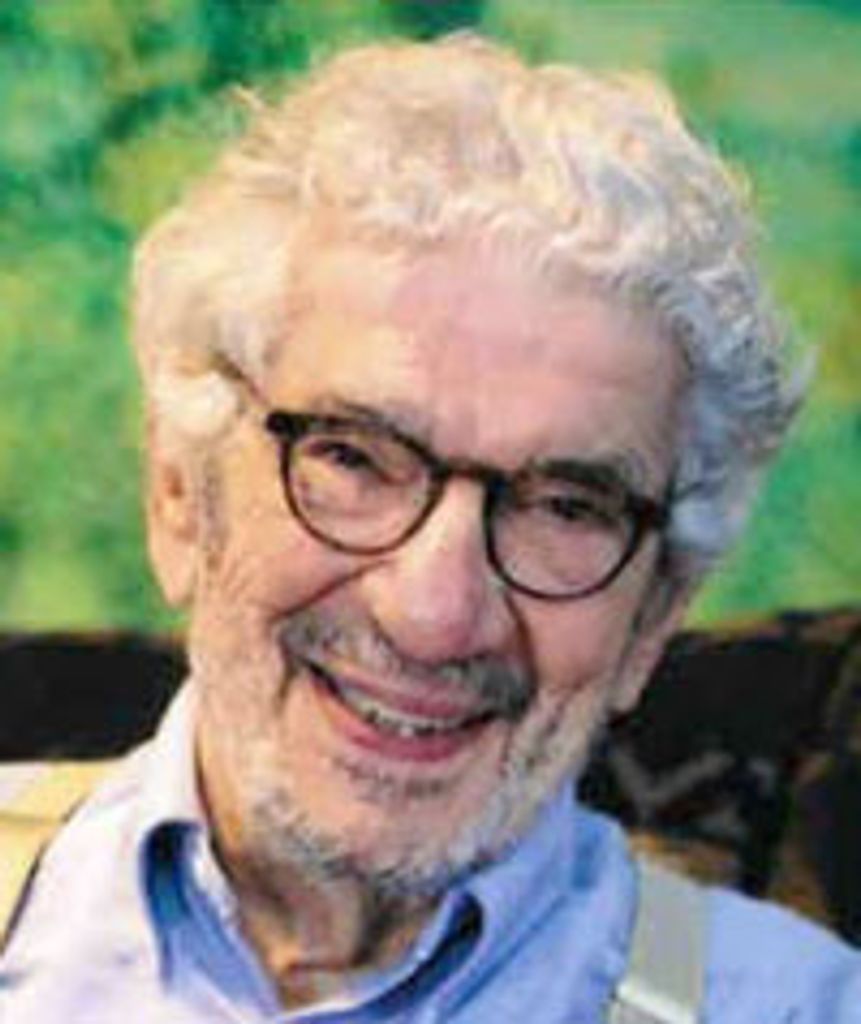
Rassias
d. Dec 2, 2015
John Arthur Rassias' Obituary
John Arthur RassiasDartmouth's William R. Kenan Professor of French and Italian, Emeritus, and creator of the Rassias Method of teaching languages, died December 2nd at his home in Norwich, VT. He was 90.
He will be remembered for his internationally renowned teaching method"€"which includes rapid-fire drills, immersion in culture, and a healthy dose of theater"€"a unique style that quickly makes students comfortable using a new language. Key to the method was his dramatic style, the goal of which was to eliminate students' inhibitions and encourage dialogue from the first day of class.
Rassias grew up in Manchester, N.H., a son of Greek immigrants. Before heading to college, he served in the U.S. Marines, piloting an amphibious tank in the 1st Marine Division's landing in the Battle of Okinawa, on April 1, 1945, the last and largest of the Pacific island battles of World War II.
He studied French at the University of Bridgeport, from which he graduated summa cum laude in 1950. Following graduation, he went to the Université de Dijon in France as a Fulbright Scholar, and stayed there to complete his Doctorat d'Etat (PhD). Later on, he went to Paris, where he studied French drama at the Sorbonne and acted in the theater. His time in the theater served him well as he developed his teaching method.
In 1964, he began a long affiliation with the Peace Corps language programs, working as a consultant and developer. Two years later, he became director of the first pilot program of languages for the Peace Corps in Africa, leading training in Ivory Coast. The Rassias Method of language instruction was later adopted by the Peace Corps.
Rassias joined the Dartmouth faculty in 1965, and served thousands of students and colleagues for close to 50 years. He was a founder of the College's Language Study Abroad programs and was the director of foreign study programs for several years. His commitment to communication and cultural understanding was the cornerstone of his life, in class and out. Indeed, lessons with his students took place everywhere from biking to castles in the Loire Valley, to playing basketball against French teams; Rassias also took his classes "from page to stage" in Hanover and abroad, studying theater at Dartmouth in Paris, Bourges, Blois and Toulouse. Students and family alike understood how important it is to live a language.
National recognition came in 1978, when he was the only language instructor appointed to President Carter's Commission on Foreign Language and International Studies, where he also chaired the writing team that drafted the commission's final report.
At Dartmouth, he founded the Rassias Center for World Languages and Cultures and most recently, with the Center, became one of the founding partners, along with Worldfund, a non-profit in New York, which operates English language programs in Mexico, of the Inter-American Partnership for Education, a Clinton Global Initiative Commitment. In the past few years this program, under the guidance of John's daughter Helene Rassias-Miles, has trained more than 2,000 English language public school teachers in the Rassias Method, and they, in turn, have instructed hundreds of thousands of Mexican students in states throughout the country.
Dartmouth was not the only recipient of Rassias' enthusiasm for languages. He shared his method with teachers from the People's Republic of China, Bulgaria, France, Japan, Greece, Turkey, the city of Baltimore school system, the Federal Law Enforcement Training Program, the New York City Transit Police, and the Navajo and Mohawk Nations among others. The Rassias Method of instruction lives on, not only at Dartmouth, but in places across the world.
Rassias was the recipient of a number of honors, among them: he received The Danforth Teaching award in 1971; the French government awarded him the Palmes Académiques in 1978; he received the Italo Ponterotto Memorial Award in 1989, for contributions to the development of foreign language pedagogy; Dartmouth conferred the Robert A. Fish Award on him in 1997; and in 1998 he was named New Hampshire Professor of the Year by the Carnegie Foundation for the Advancement of Teaching. He was an adopted member of the Dartmouth classes of 1949 and 1976 and he was the holder of eight honorary degrees.
His colleagues and students will remember his perpetual optimism and curiosity. Clad in his trademark suspenders, he was a familiar face on campus, and for a number of years led the annual Commencement procession to the Green. During the Geisel Medical School Class Day ceremony, he would dress as Hippocrates in order to administer the Hippocratic Oath in both Greek and English to the graduating medical school students. Whether cracking an egg on a student's head to prove a point of literature, or throwing paper balls across a classroom, Rassias made learning languages logical, lively, and above all, fun.
His wife, Mary Evanstock Rassias, predeceased him on July 10, 2012. The couple had been married for 57 years. They met at the University of Bridgeport and, beginning with their marriage in Paris, they assured an environment full of acceptance and laughter for their own children, grandchildren, and the myriad of people who found their ways into their lives. Mary and John Rassias always made room at their dinner table, whatever country they were in, for all.
In addition to Helene Rassias-Miles and her husband, William Miles Sr., survivors include a son, Athos Rassias, and his wife, Marcia Procopio, and daughter Veronica Markwood and her husband, David; nine grandchildren and one grand daughter-in-law: Jacob Markwood and his wife Rachel, Noah, Eliza, Matthew, Nicholas, Aris, Ida, Daniel, and Isaiah; three of Mary's siblings; many nieces, nephews, step-grandchildren and their spouses, step-great grand-children, and former students and colleagues, all of whom made him immensely proud.
The family is so grateful for the overwhelming love and support they have received from people around the world whose lives were touched by John Rassias.
Calling hours will be held at the Rand-Wilson Funeral Home in Hanover from 6 to 8 p.m. on Thursday, December 10th. A funeral service will be held at 11 a.m. on Friday, December 11, at Rollins Chapel on the Dartmouth campus. A reception and celebration of the life of Professor Rassias will be held after the funeral at the Hanover Inn. Burial will be private.
In lieu of flowers, contributions may be made to either:
1) The Rassias Center for World Languages and Cultures at Dartmouth College, 6071 Blunt Alumni Center, Dartmouth College, Hanover, NH 03755 USA.
Or:
2) To the Upper Valley Haven http://uppervalleyhaven.org/donate/
Arrangements are under the direction of the Rand-Wilson Funeral Home of Hanover, NH.
John Arthur Rassias' Guestbook

Visits: 20
This site is protected by reCAPTCHA and the
Google Privacy Policy and Terms of Service apply.
Service map data © OpenStreetMap contributors